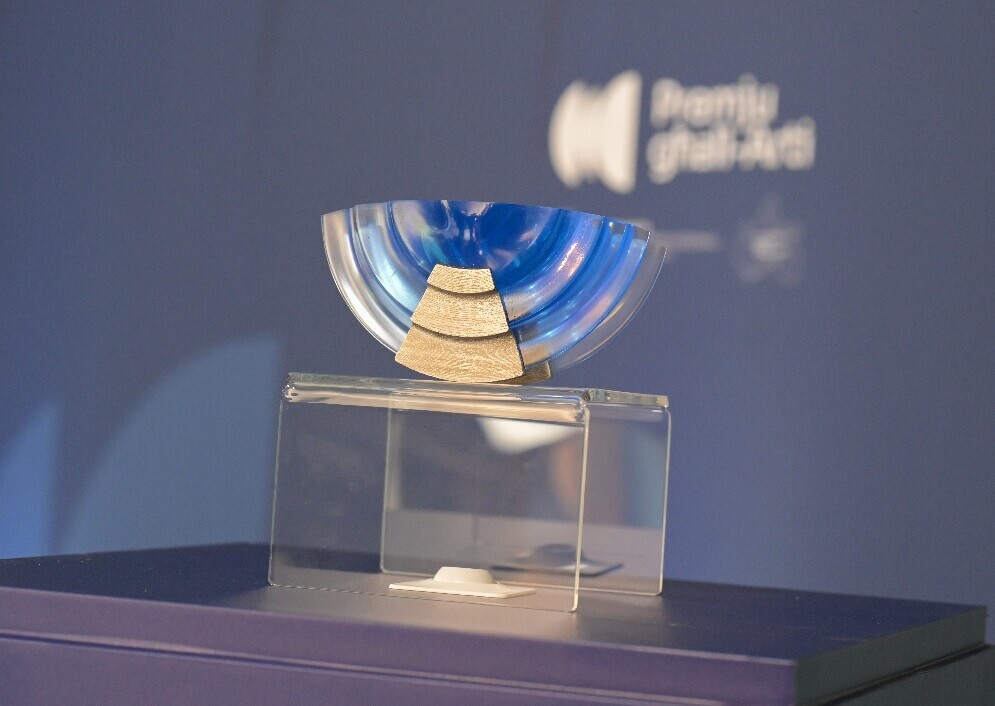
Malta won the medal for the best Pavilion at the London Design Biennale 2025 out of 50 exhibitors from around the world with the installation URNA.
This is the second time that Malta is participating in this prestigious Biennale.
URNA has a culturally significant theme and message that revolves around the concept of human remains management and artistically anticipates the adoption of cremation in the Maltese islands. This installation and its cultural message are led by curator Andrew Borg Wirth, architects Anthony Bonnici and Thomas Mifsud from Ebejer Bonnici, artistic director Matthew Attard Navarro from ANCC Studio, Maltese artist Stephanie Sant, French photographer Anne Immelé and Cypriot architect Tanil Raif.
Minister for Culture, Arts and Local Government, Owen Bonnici, noted that Malta is investing heavily in culture and the arts and because among the Maltese and Gozitans there is an abundance talent. “Whenever the Government invests in Maltese artists the latter always make Malta proud,” said Bonnici.
Bonnici described URNA as a bold and provocative project and said that it accurately expresses the role of art: challenging the status quo. He referred to the tenth anniversary of Malta Arts Council by stating that during these ten years the Council has worked tirelessly in favour of the local arts sector so that today Malta has world-class artists who honour our country’s name around the world.
Albert Marshall, Executive Chairman at Arts Council Malta said that the London Design Biennale is an international exhibition of great prestige and extraordinary value and that the Council is honoured to have been entrusted once again to act as the Commissioner and Contracting Authority for Malta’s participation. He explained that URNA has a strong Maltese element as it applies elements of the local landscape and innovative material technologies such as reconstituted limestone – Malta’s unique natural resource – making URNA an ecologically sustainable project.
Referring to the tenth anniversary of Arts Council Malta which is being celebrated this year, Marshall noted that over the past ten years the Council has invested more than €28 million in investments that have strategically developed the sector into a professional and economically viable industry.
Architect and project co-leader Anthony Bonnici and Architect and project construction manager Thomas Mifsud explained how each circle in the large sculptural sphere represents one single soul – a reflection of the sedimentary process of Maltese stone. Created in collaboration with Architect Tanil Raif, the sculpture is intended to create a new funerary landscape in Malta. Using an innovative new product by Halmann Vella called Recobel, the sculpture turns the historical individuality of the urn upside down to create a common object.
The pavilion also includes a film by Stephanie Sant, who works in both film-making and performance art, and a book covering all the results of the projects, including a photographic essay by photographer Anne Immelé. Presented by artistic director Matthew Attard Navarro, the book explores the legacy of the project and features the design and research processes, some work by University of Malta students and a number of writings by the team.
URNA curator Andrew Borg Wirth said that the project brings together a multinational team to tackle an important topic. Design has the potential to bring about change in society, and as cremation becomes a reality in Malta URNA is establishing a new object of ritual and design for commemoration after death.
URNA is commissioned by Arts Council Malta. This was made possible through the support of Halmann Vella, Gasan Foundation, Heritage Malta, the Embassy of France in Malta, Malta Enterprise, Visit Malta, KM Malta Airlines and other partners.